Most people see rubber only in its final form. They see it in the form of a seal or a liner. Or, they see it as a gasket or a component doing its job quietly. What they do not see is that performance is decided long before shaping or installation. It starts at the molecular level with formulation choices that determine strength and flexibility, added with resistance and lifespan. It is where industrial rubber becomes an engineering material rather than a commodity.
Rubber is not one material. It is a formula
Rubber is never just ribber. Every application requires a tailored blend. Heat exposure and abrasion with chemicals and pressure, as well as movement, demand different responses from the material.
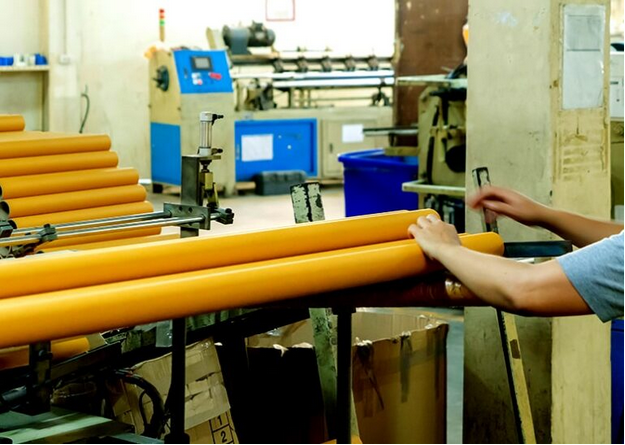
It is the role of rubber compounding. It is designing a specific recipe that balances elasticity and hardiness adding resilience and durability. A small change in formulation can dramatically alter how a product behaves under stress.
Why rubber compounding is the real intelligent layer
Compounding is where technical knowledge matters most. Polymers and fillers, as well as curing agents and additives, must work together and not interfere with each other. Poorly balanced compounds may look fine at first, but fail prematurely in real world use.
Skilled rubber compounders understand how formulations react over time, not just during testing. Their expertise ensures rubber products maintain performance after repeated cycles and temperature changes, along with prolonged exposure to harsh environments.
From compound to shape: The role of rubber moulding
Shaping begins once a compound is finalised. Rubber moulding transforms engineered material into functional components. But moulding is not just about form. It locks in performance characteristics.
Pressure and temperature, added with curing time, must align perfectly with the design of the compound. Errors at this stage can compromise elasticity or introduce internal stress or weaken structural integrity. Precision moulding ensures the compound behaves exactly as engineered.
Different moulding approaches serve different outcomes
Not all rubber moulding techniques achieve the same result. Compression and injection, as well as transfer moulding. Each influences density and surface finish and adds dimensional accuracy.
Experienced manufacturers select moulding processes based on function and volume, along with tolerance requirements, and not convince.
Industrial rubber is built for unforgiving environments
Indytrail applications demand reliability. Components often operate where failure is expensive or dangerous. That is why industrial rubber must withstand extreme conditions without degradation.
It includes
- Continuous mechanical stress
- Chenciam; exposure
- Temperature variation
- Weathering and UV impact
Only well formulated compounds combined with disciplined moulding deliver this level of resilience.
The overlooked importance of testing and validation
Rubber performance cannot be assumed. Testing validates whether a compound and moulding process delivers real world reliability. Tensile strength with elongation and compression, as well as resistance testing, reveal how materials behave under pressure.
Manufacturers who do enterprise testing reduce risk for end users. The step separates engineered solutions from trial and error production.
Customisation is not a luxury in rubber manufacturing
Customisation is often unnecessary/ off the shelf compounds rarely meet exact performance requirements. Adjustments may be needed for hardness, rebound, or resistance to specific substances.
This is why strong collaboration between clients and rubber compounders matters. Compounds can be engineered to solve problems rather than react to failures when application details are understood early.
Lifecycle Thinking drives Better Rubber Solutions
Rubber parts are selected for their durability rather than their aesthetic appeal. A product’s performance from installation to replacement is taken into account by lifecycle thinking. This covers failure modes, maintenance cycles, and wear rate.
Even though the initial material costs are greater, well designed rubber systems save overall ownership costs, increase service life, and decrease downtime.
The Rise of Sustainability as a Performance Indicator
In the production of rubber, sustainability is now a must. Compounding effectively lowers waste. Rejects are reduced by optimised moulding. Products with longer lifespans require fewer replacements.
Performance improvement and environmental responsibility are not mutually exclusive in responsible rubber manufacture.
Why Integration Is More Important Than Separate Procedures
Integrated thinking produces the best rubber solutions. Testing, moulding, compounding, and application knowledge must all cooperate. Performance gaps arise from the fragmentation of these phases.
Results from manufacturers who closely monitor or manage every step are more reliable and consistent.
Final words
Rubber performance is not coincidental. It is designed. Every choice, from careful rubber compounding to methodical rubber moulding, affects how well industrial parts function in actual use. Knowledge, process control, and long term planning—not short cuts—are the keys to producing dependable industrial rubber products. Rubber is one of the most adaptable and reliable materials in contemporary industry when formulation and manufacture are in harmony.
With its carefully designed rubber products, AUP Rubber shines in industrial applications that require accuracy, consistency, and long term durability. AUP Rubber produces industrial rubber products designed for harsh conditions by fusing sophisticated rubber compounding with regulated rubber moulding techniques. Their emphasis on application specific design and quality testing guarantees dependable performance that promotes efficiency added with safety and long service life across industries.